Ritav Das

ECE student at Ohio State, building EV wiring harnesses real-time DSP filters polymer simulations grid-risk models robot control code

B.S. Dec 2028 · seeking Summer 2027 internships

Selected
work

A race car, research, lab hardware, and a few systems I built to find out if they would work.

Formula Buckeyes SAE · Low Voltage Electronics

Wiring the team's first electric car

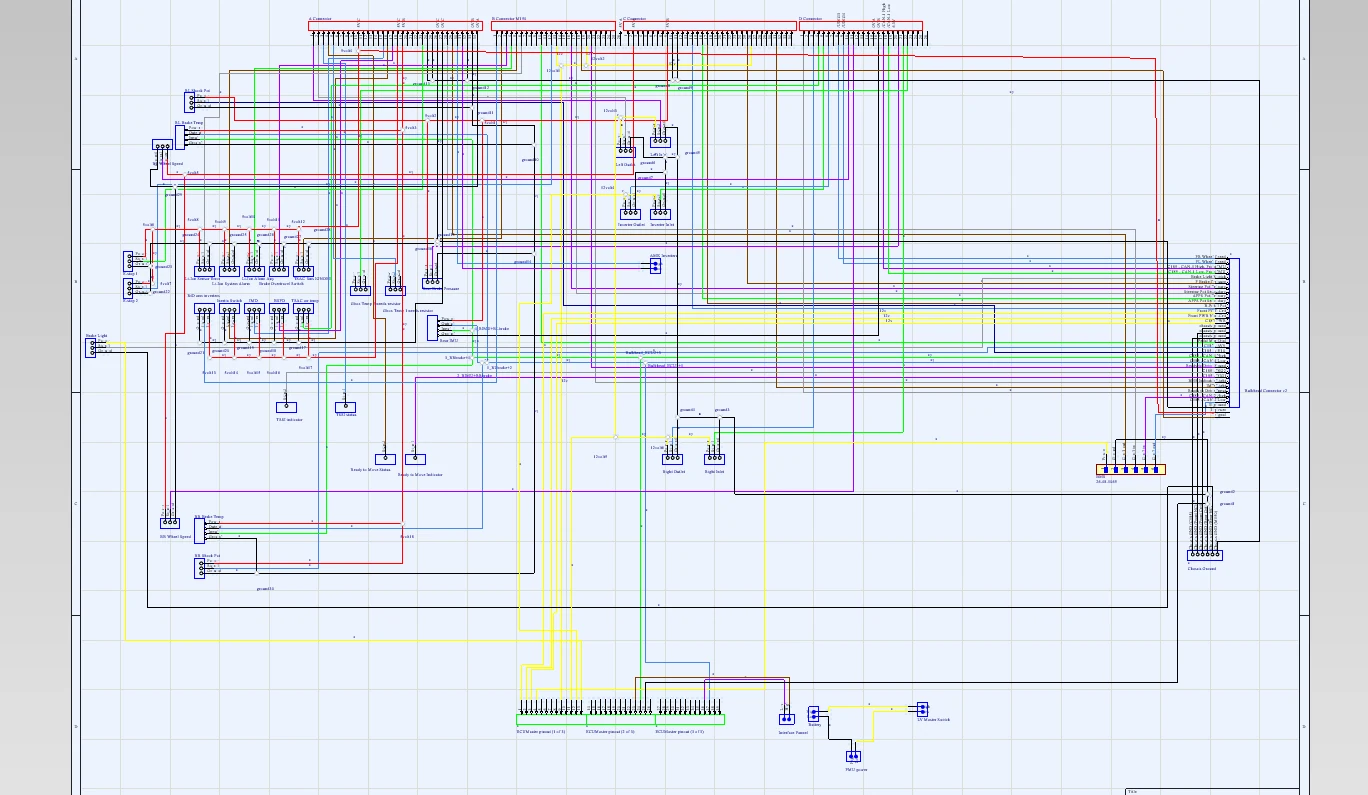
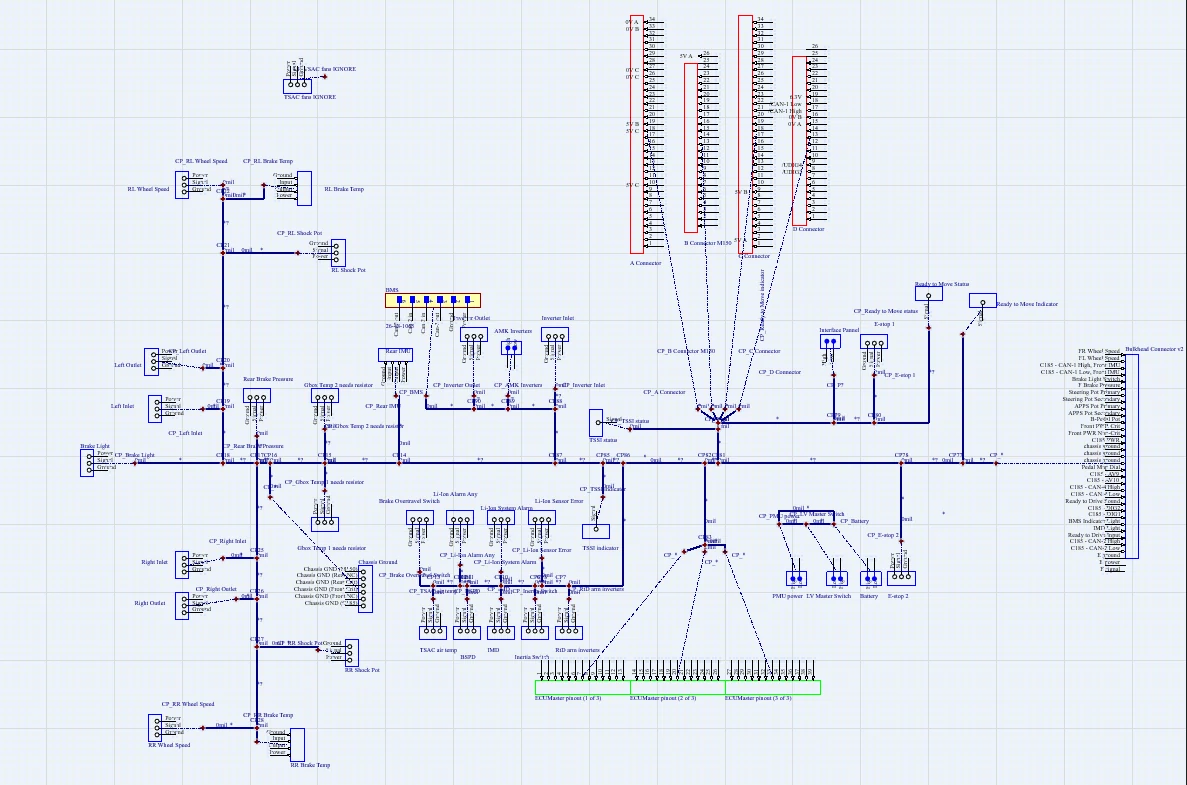
From August 2025 to September 2026, I worked on the low-voltage harness for FB26, the team's first EV, alongside undergraduate members. I built the front harness pin tables (52 used pins on the rear bulkhead connector, plus the M150 ECU, C185 dash, and steering wheel pinouts), then routed, terminated, and labeled connections from the electrical schematics.

LV harnessPin tablesCAN wiringCrimping & termination
Formula Buckeyes ↗

Rear bulkhead connector · 52 pins I mapped

Hover or tap a pin to see what it carries.
Research · Hall Group, Ohio State Chemical Engineering

Polymer chainmail on a supercomputer

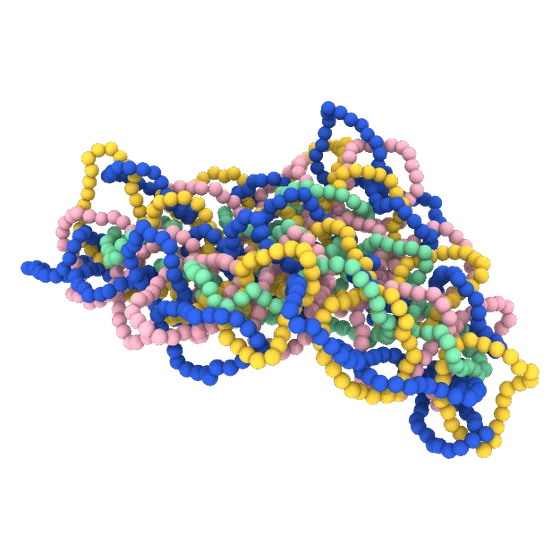
I run coarse-grained molecular dynamics in LAMMPS on Ohio Supercomputer Center clusters to study polycatenane sheets: 2D chainmail of interlocked ring polymers, modeled on kinetoplast DNA. The question is how the crossing pattern of the links (chirality) and the solvent together decide whether a sheet stays open or collapses.

LAMMPSSlurm @ OSCPythonOVITO
See the simulation ↓
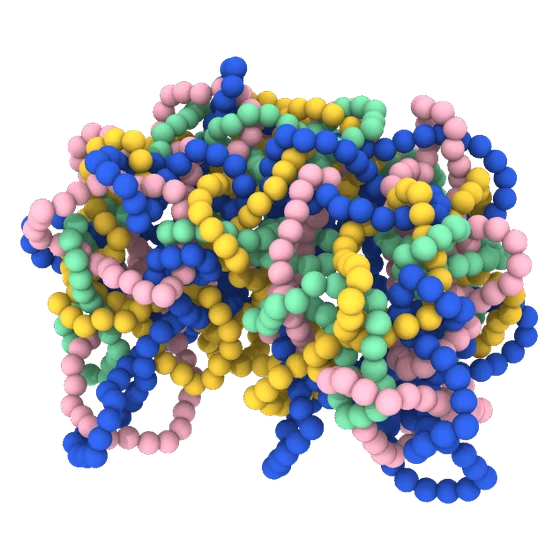
225 rings · 5,400 beads · εa = 0.6 · rendered in OVITO
Power distribution · independent project · Python

Skua: which transformer do you check first?

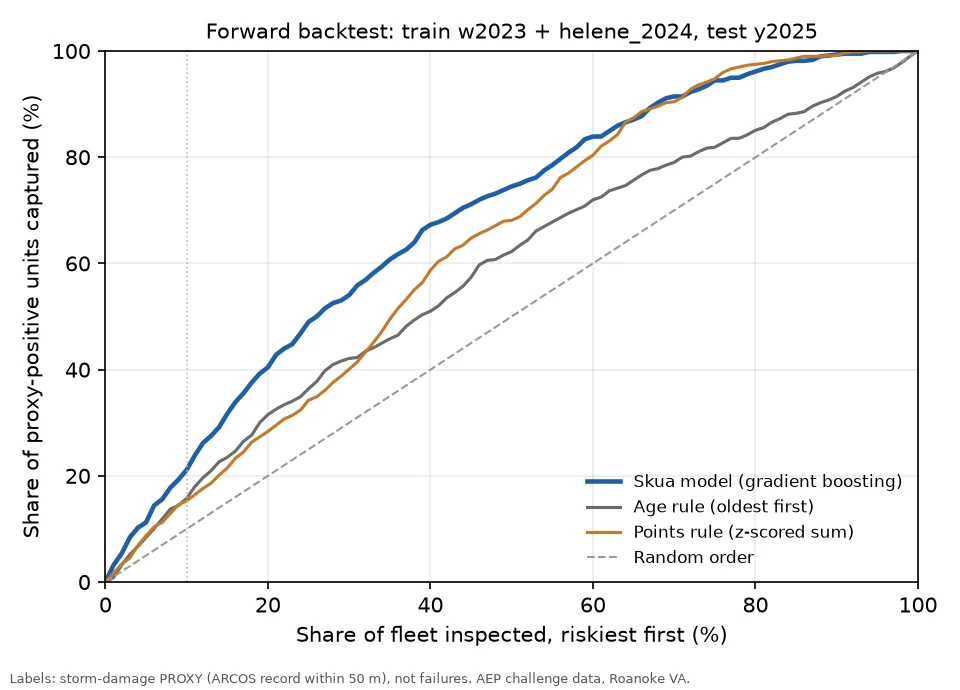
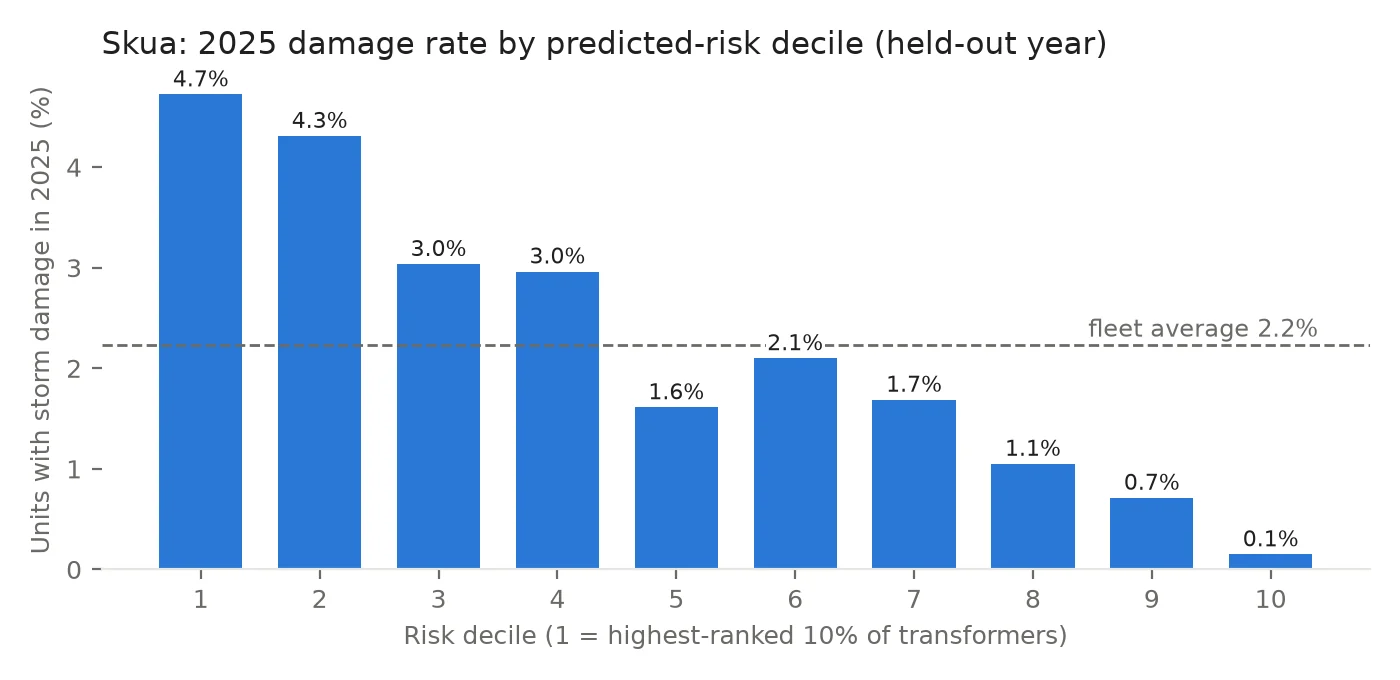
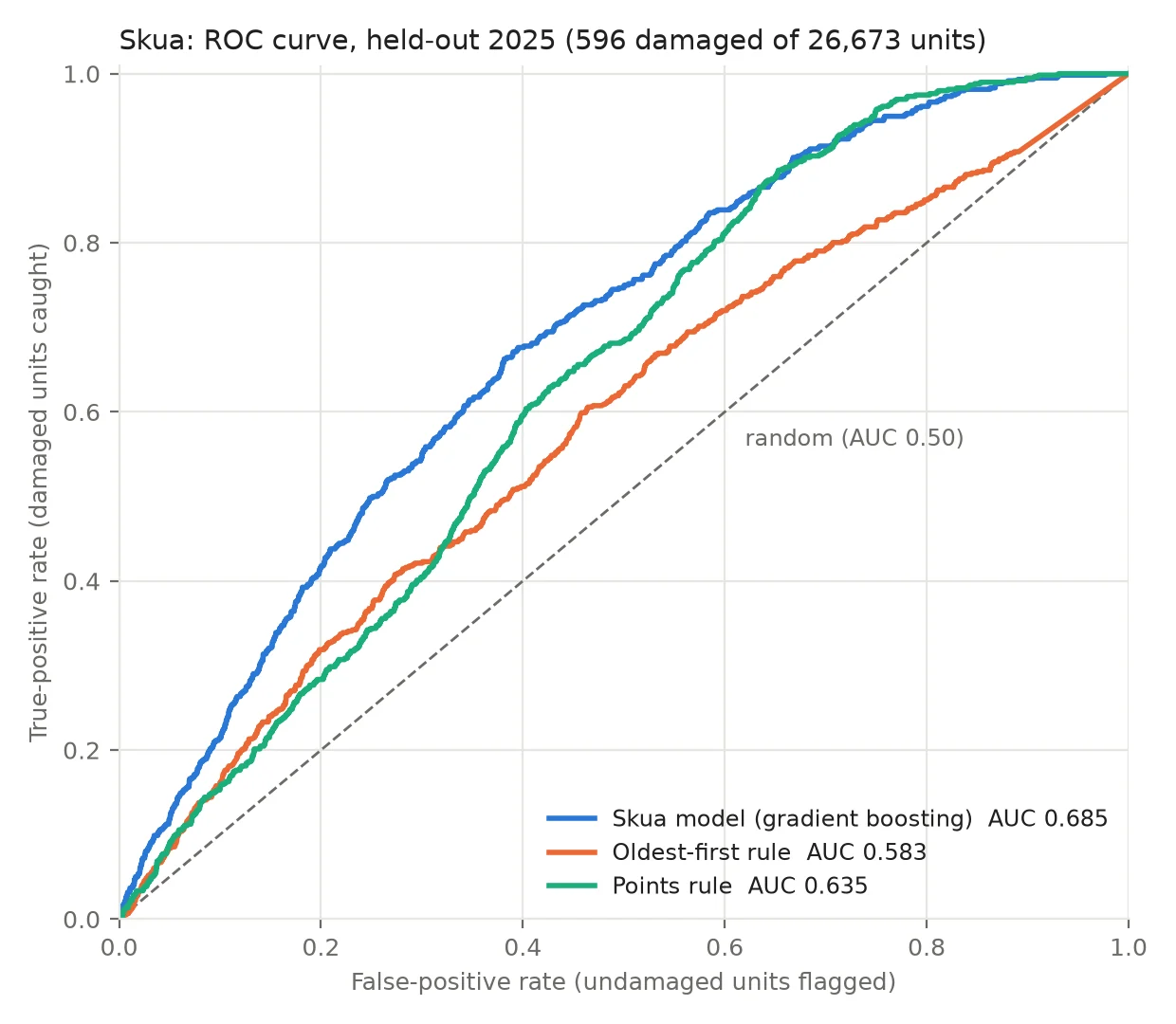
Skua ranks 26,959 distribution transformers by storm risk so a crew knows where to look first. I engineered 39 point-in-time features, trained a monotone-constrained gradient-boosting model, and turned the ranking into a weekly 20-stop work list with a plain-English reason for every stop. It is an independent rebuild, on the public HackOHI/O 2026 AEP challenge data (Roanoke, VA), of a concept the LoadShed Sentinel hackathon team started.

Gradient boostingForward-in-time backtestBootstrap CIs
Ask me for the report →

Ranking quality (AUC, 0.5 = coin flip) · trained 2023–24, tested on 2025

Skua
0.685
Points rule
0.635
Oldest-first
0.583

Units with 2025 storm damage nearby, caught in the top 10%

Skua
21.1%
Oldest-first
15.8%
Random
10.0%

The caveat I report: two choices made after a first look at 2025 supply most of the lead; without them the top 10% catches 16.4%. The ranking stays frozen until a fresh test.

ECE 2050 lab · Ohio State · Autumn 2026

From scope traces to real-time filters

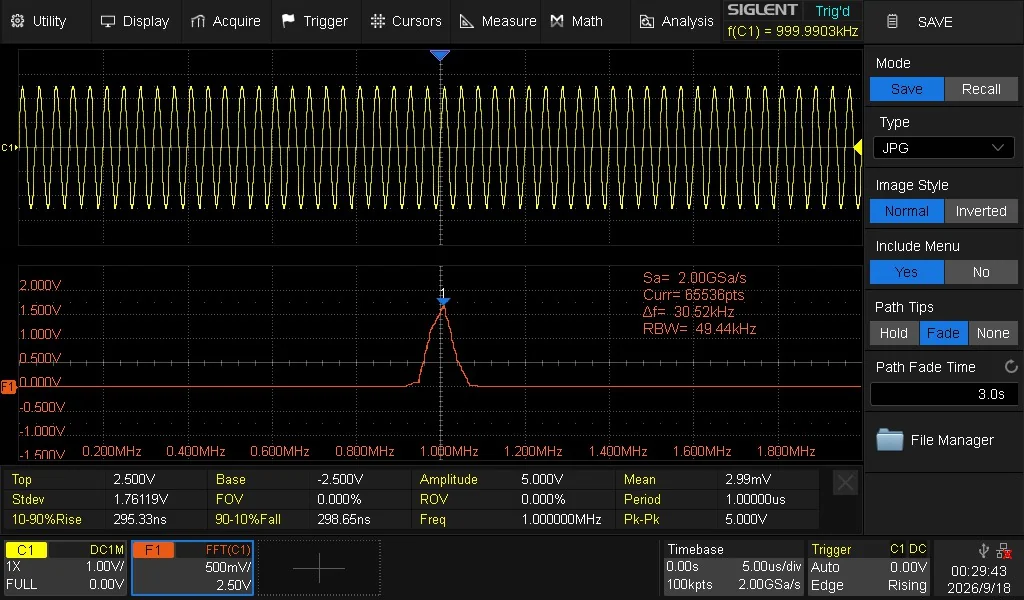
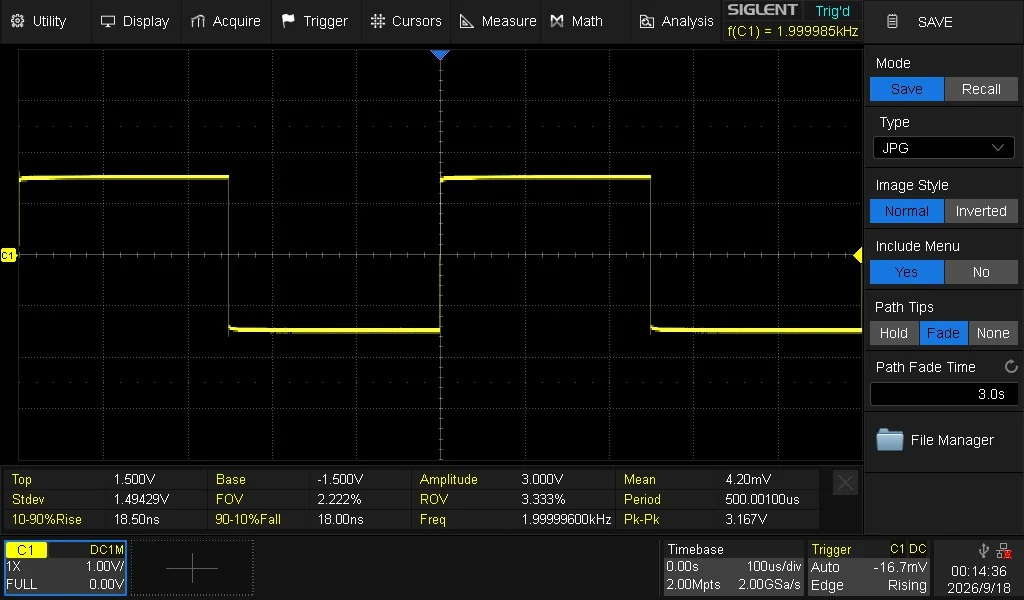
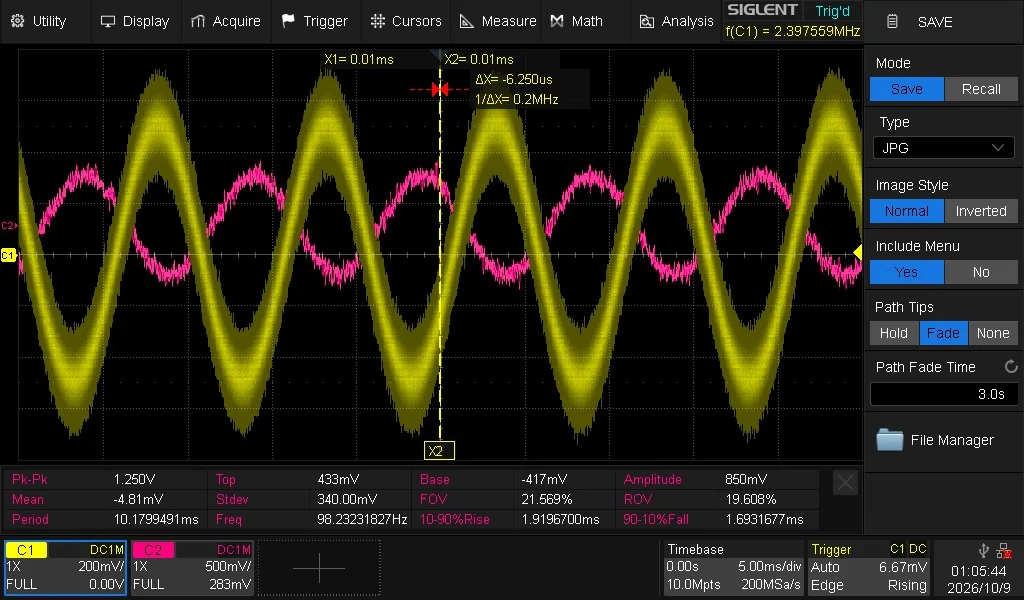
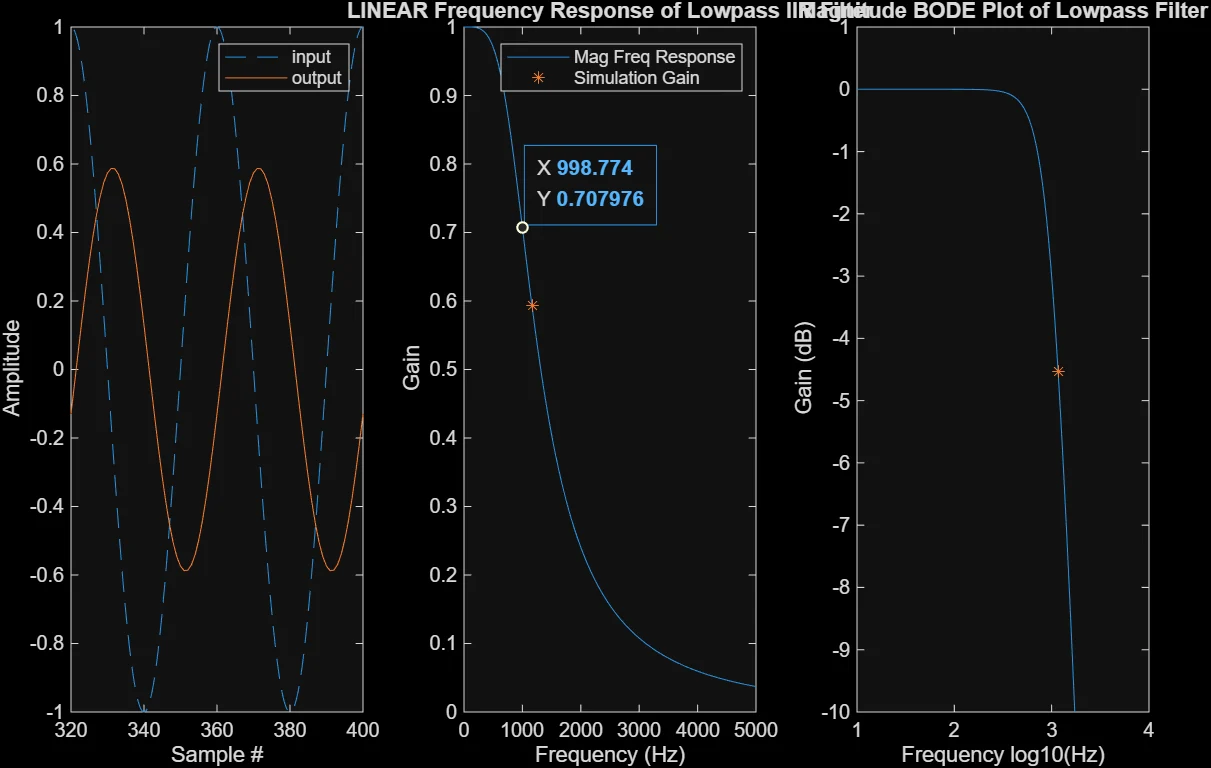
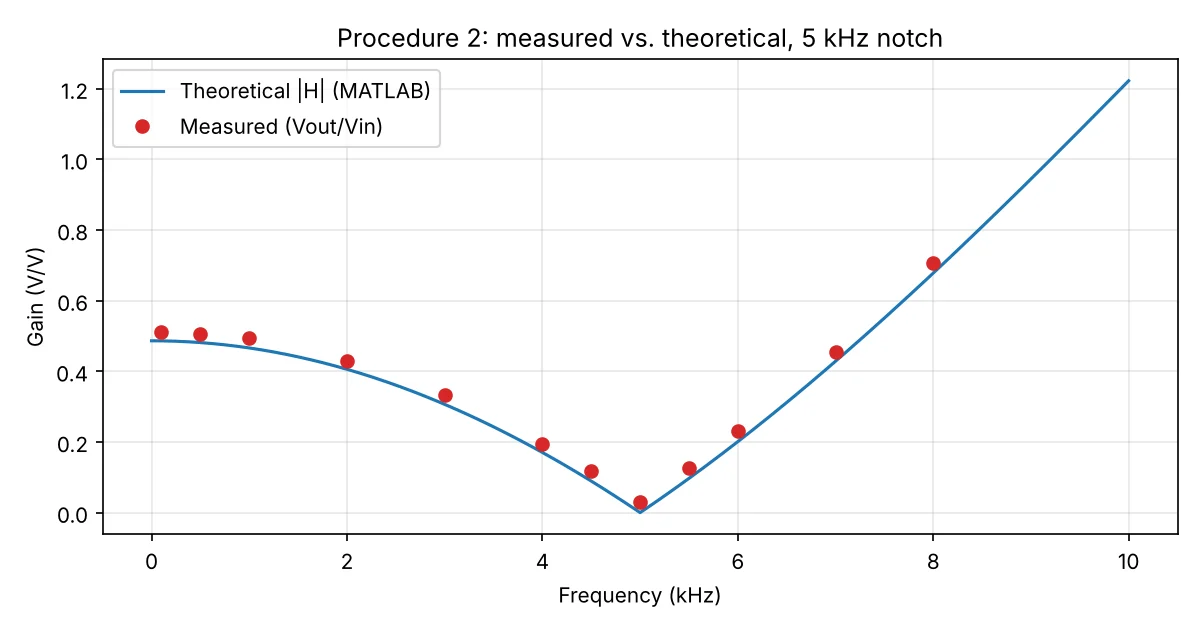
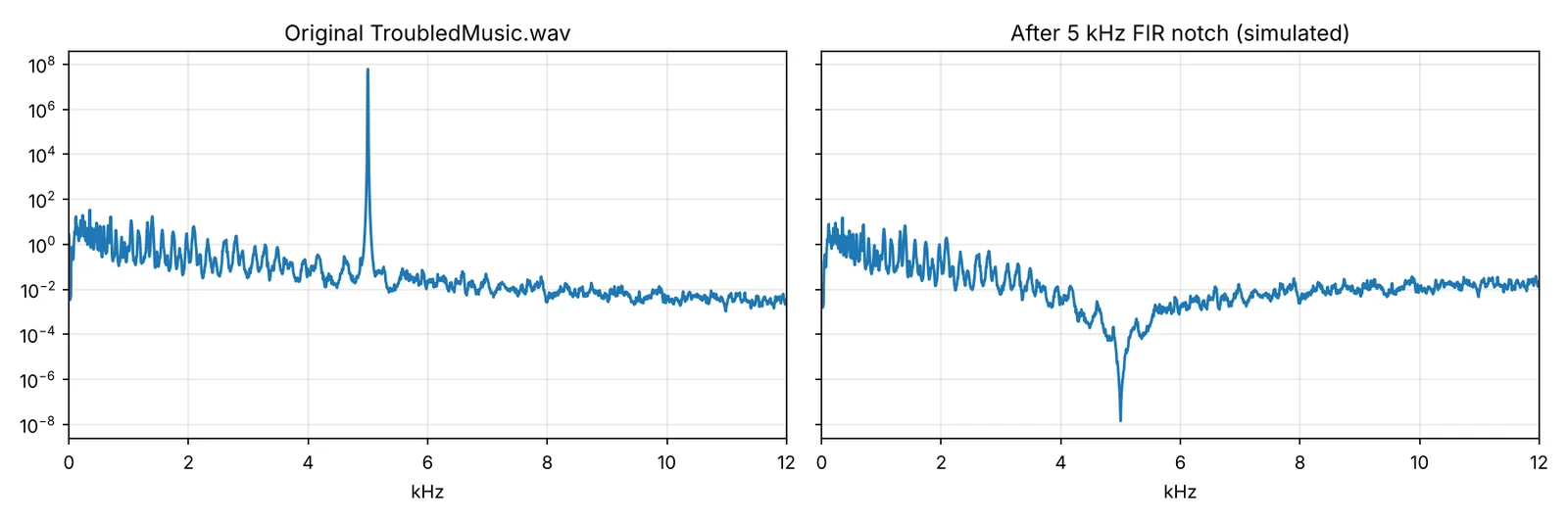
In ECE 2050, my lab partner and I measured sampling and aliasing on a bench oscilloscope, designed a Butterworth low-pass filter in MATLAB and ran it on the lab board, and built a 5 kHz notch filter that runs in real time on a TI C2000 microcontroller. Every result is checked against theory.

OscilloscopeMATLAB / SimulinkTI C2000 DSPz-plane design

Three labs, measured on real hardware

Siglent scope capture of a 1 MHz sine and its FFTScope capture of a 2 kHz, 3 Vpp square wave with measurements
  • Measured a 2 kHz, 3 Vpp square wave at 1.999996 kHz and 3.000 V on a Siglent SDS2104X Plus.
  • At 2 MSa/s, 1.1, 1.2 and 1.4 MHz inputs showed up at 900, 800 and 600 kHz: exactly |F − Fs|.

Click a capture to enlarge it.

FIRST Tech Challenge 11187 · 2023–2025

Co-captain and programming lead

I wrote the autonomous and tele-operated control software in Java, including PID loops with encoder feedback, and kept the team codebase in Git. As co-captain of a 10-member team, I directed how the mechanical, electrical, and software subsystems came together, and I designed robot parts in Onshape.

JavaPID controlEncodersOnshape

What a PID loop does (illustration)

setpoint P only: slow, falls short tuned PID time →
Independent project · Python, C#, NinjaTrader

A backtesting and execution engine built to say no

I built a research platform that generated and backtested 2,300+ strategies on 6+ years of futures and crypto data; it rejected 99% of them through cost modeling, multiple-testing correction, and a one-shot, hash-locked holdout. The execution side is a Python signal engine driving a C# NinjaTrader add-on with 10 independent safety rules and a watchdog.

Safety interlocksWatchdogReplay testingC#

The funnel (bars to scale)

Strategies generated + backtested 2,300+
Survived costs, correction, holdout ~1%
Low-correlation portfolio 15

1.49profit factor of that portfolio on 6 held-out months (simulated account)

Replay: 138 trading days through the full live stack

172/172backtest trades matched
0position differences
87,552bars checked

10 safety rules, each enforced twice (bot + add-on backstop)

Flat before the closeDaily loss stopDrawdown floorSize capKill switchStale-target flattenWrong-account guardRunaway-order stopRestart-safe targetsStop after passing

No real money: the bot has only run in replay against a simulated NinjaTrader add-on.

Chainmail,
but molecular.

Undergraduate Researcher · Hall Group · Oct 2024–present (started in high school)

Kinetoplast DNA is a natural chainmail: thousands of DNA minicircles linked into one sheet. We study a simplified version: square lattices of rings, where every ring links to its four neighbors with an over–under or under–over crossing. The order of those crossings around a ring sets the sheet's chirality: A (alternating), B (non-alternating), or C (semi-alternating).

With Prof. Lisa Hall, our study covers 36 systems (3 sheet sizes × 3 chiralities × 4 solvent strengths) to see how chirality and solvent quality together reshape the sheet and its rings. I run the LAMMPS jobs on OSC and the Python analysis. The work is now a working paper where I am second author.

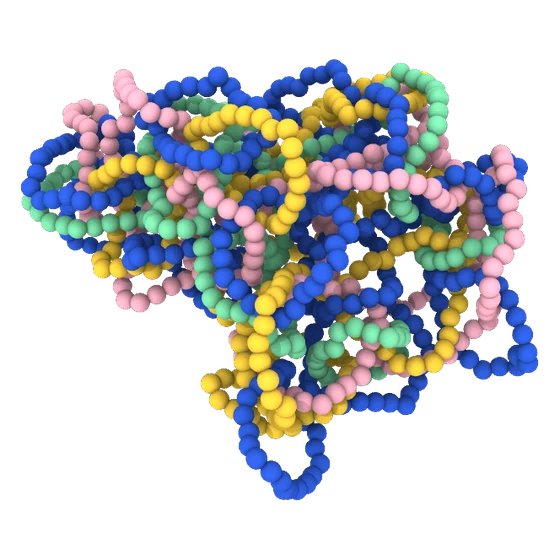
Below is one of those conditions, re-run on my desktop with dense snapshots: a 15×15 chirality-A sheet (225 rings, 5,400 beads) in the poorest solvent we studied. Scroll to watch it collapse.

t = 0 τRg = –
01 · Model

Beads on a spring

Each ring is 24 beads. FENE bonds plus a short-range repulsion keep rings from passing through each other, and a bending potential (k = 5 kBT) gives each ring about five persistence lengths. A Langevin thermostat at T* = 1 stands in for the solvent.

02 · Solvent

One knob: εa

Solvent quality is an attractive well between beads. At εa = 0 the solvent is good and the sheet stays open; the paper sweeps 0, 0.2, 0.4, and 0.6. This run uses 0.6, so beads would rather touch each other than the solvent.

03 · Collapse

Sheet to globule

The radius of gyration falls as the sheet folds onto itself: in this run, from 26.9σ to 11.9σ over 3,000 τ. In the paper, the sharpest drop sits between εa = 0.2 and 0.4 (theta solvent is near 0.4), and chirality barely moves that threshold.

04 · Rings

The rings change too

As the sheet turns spherical, individual rings stretch into rod-like shapes to pack densely, and edge rings stay more open than interior rings. Ring relaxation time roughly doubles at εa = 0.6 in the larger sheets.

LAMMPS · 600,000 steps of 0.005 τ · εa = 0.6 · T* = 1 · rendered frame by frame in OVITO

Same rings,
different shapes.

Three 7×7 sheets (49 rings) in good solvent, εa = 0. They differ only in the order of their crossings, and that alone sets the curvature.

Chirality A polycatenane sheet curled into a deep bowl

A · alternating

OU, OU, OU, OU · curls into a deep bowl

Chirality B polycatenane sheet in a saddle shape

B · non-alternating

OU, UO, OU, UO · saddle

Chirality C polycatenane sheet, nearly flat

C · semi-alternating

UO, UO, OU, OU · nearly flat; its largest gyration eigenvalue is about 2× that of A or B

Where the sheet gives up

Radius of gyration versus solvent strength for the three 7×7 sheets, from a finer sweep I ran in steps of 0.1; each point is a separate LAMMPS run averaged over its second half. All three shrink as the solvent worsens; C starts largest and falls hardest, and by εa ≈ 0.6 every sheet is the same compact globule.

Hover a point · tap a pattern to toggle

What we found

Chirality sets the shape

In good solvent, A forms a bowl, B a saddle, and C stays nearly flat; in 7×7 sheets, C's largest gyration eigenvalue is about twice that of A or B.

Solvent sets the size

Every sheet size collapses as εa rises, with the sharpest drop between 0.2 and 0.4. The threshold depends only weakly on chirality.

Edges behave differently

Edge rings have fewer links and stay expanded while interior rings collapse; rings nearest the center end up smallest.

Collapse slows the rings

Cross-ring relaxation time is nearly flat through εa = 0.4, then roughly doubles at 0.6 (236 τ to 467 τ for the 225-ring A sheet).

2025 · oral talkMidwest Thermodynamics & Statistical Mechanics Conference

Selected as the presenting author for an oral talk on this research; the only high school student presenting.

2025 · oral talkOSC Research Symposium

Presenting author, to a supercomputing audience; again the only high school student.

In preparationWorking paper, second author

How linkage chirality and solvent quality reshape polycatenane sheets and their rings; Hall Group, Ohio State.

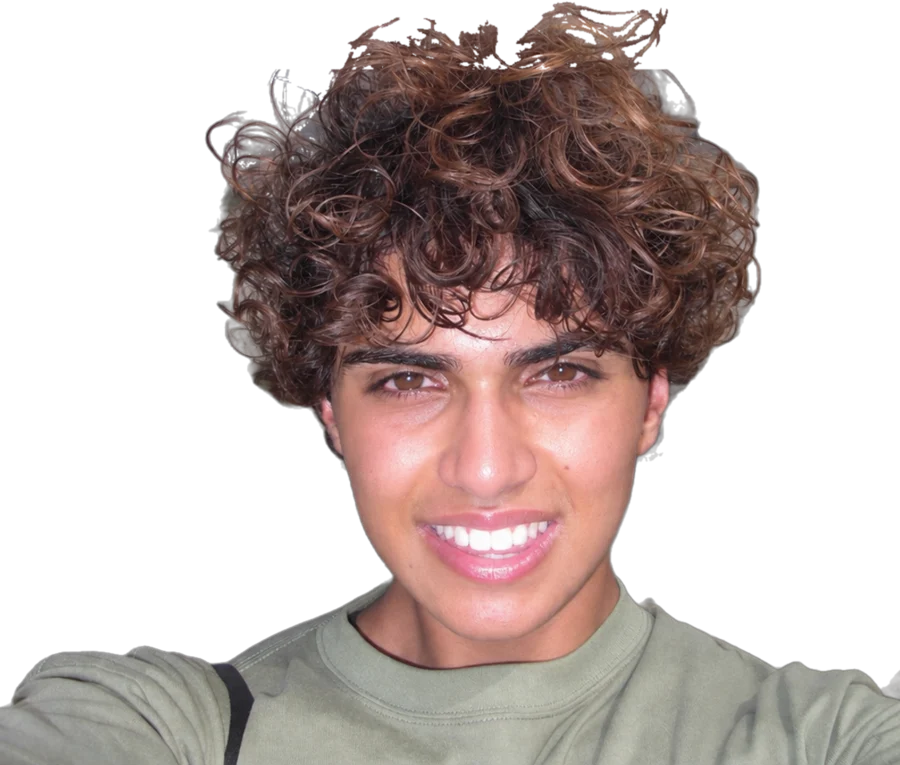
Photo of Ritav smiling, with big curly hair

A little about me

I like turning ideas into things that run, whether that is a simulation on a supercomputer, a wiring harness on a race car, or a model that tells a utility crew where to look first.

I entered Ohio State with 96 credit hours through dual enrollment and AP, so I started my B.S. in Electrical and Computer Engineering with senior standing; I expect to graduate in December 2028. I care more about results I can defend than results that look good, which is why most of my projects spend as much time on testing as on building. Ultimately, I want to work where hardware, software, and real data meet.

3.86GPA
96credit hours before day one
2conference talks
36polymer systems in our study

Frequently asked questions

A Summer 2027 internship. I am most excited by electrical engineering roles in power and hardware, and by work where hardware, software, and real data meet: robotics, test, and research computing.

I took college courses through dual enrollment (OSU Academy and Columbus State) and AP during high school, so I entered Ohio State with 96 credit hours. That let me jump into coursework like Signals & Systems, Digital Logic, Analog Circuits, and Applied PDEs early.

Python, C++, C#, Java, and Bash. For science and data: NumPy, pandas, matplotlib, scikit-learn, and MATLAB/Simulink. For computing: Linux, Slurm on OSC clusters, LAMMPS, Git. For hardware: oscilloscopes, the TI C2000 DSP board, SPICE/LTspice, schematics, harnessing, and Onshape.

Yes. It uses the same 225-ring data file and force field as the paper, re-run in LAMMPS on my desktop at εa = 0.6 with a snapshot every 10 τ so it animates smoothly, then rendered frame by frame in OVITO. The shape renders come from my good-solvent runs of the 7×7 sheets, and the chart from my earlier εa sweep.

Yes. Email me and I will share the repos and walk you through any of these projects, including the parts that did not work.

Hiring for Summer 2027? Let's talk.

© 2026 Ritav Das · Dublin, OH · Built by hand, simulated with LAMMPS